


There’s a lot of pressure on your B2B marketing content to perform. It has to connect with all of your different buyer personas, it has to pull them along all the steps in their buyer’s journey, and ultimately it has to transform them from a prospect into a lead, ready for interaction with your sales team.
That’s a heavy load. It also represents one of the most challenging tasks in your marketing portfolio. While it’s easy to produce copy to fill up your web pages, it’s a lot harder to produce effective B2B content that does everything that you need it to do.
One of the first steps toward creating effective content is to make sure you’re thinking from the point-of-view of your buyer personas. Even today, many companies approach content development from an internal perspective – thinking like the software engineer who created your product, for example, rather than the end customer who will benefit from using it. You can see this on B2B websites that lead visitors straight into tabs for ‘product overview,’ ‘technical specifications,’ and possibly ‘user reviews.’
This is important information, to be sure. But your online content has to do a lot more than just provide the simple facts on your product. If your product is an enterprise risk management platform, for example, your content has to connect with everyone from CFOs to IT managers, right from their first glance at your homepage.
If it sounds complicated, it’s because it is – your online content has to work a lot harder today than it did even a few years ago. But there’s a way to ensure that your B2B marketing content is doing its job. The best content marketing strategies support the buyers’ journeys of your prospects, from beginning to end.
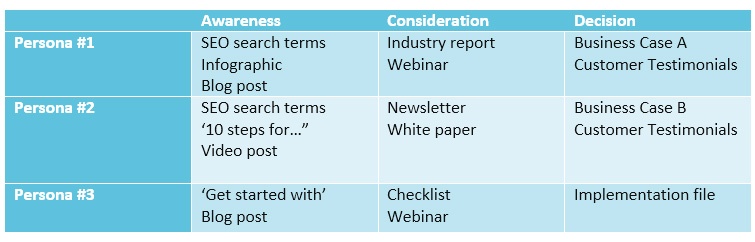
To do this right, you need to define all the types of customers you have, and develop a buyer’s persona for each of them. Then you can map out the types of content that they need, at every step of the way.
Here’s an example, showing the stages and possible types of content for each:
Then, when you’ve got your list of content projects, it’s time to talk to the pros. Writing good B2B content takes ability and experience. Professional B2B copywriters know how to write engaging content that positions your expertise, reputation and other attributes in a way that speaks directly to your intended audiences. Developing a content marketing strategy takes time upfront. But once you’ve set your plan, and your content marketing objectives, executing is easy.
Want to learn more about writing effective content, and creating a content strategy and plan?
Subscribe for our event (Infusinar) at June 1 and find out how to create a winning B2B content marketing plan.



.png?width=1080&name=Rebranding%20LS-3-Profile%20pic%20(1).png "Rebranding LS-3-Profile pic (1)")