

Living Stone blog 3


All Posts

Is the Netherlands ready for a prehospital innovation?

Dedalus, a long-time client of Living Stone, turned to us once again for our healthcare expertise to explore the Dutch market for their groundbreaking digital solution for ambulance care: amPHI. 

Dedalus: A global leader in healthcare IT 

With over 40 years of experience and more than 6,700 clients worldwide, Dedalus is a major player in healthcare IT. Their solutions, built on Open Standards, help healthcare organizations enhance care processes and develop innovative care models. 

amPHI: A proven solution 

Developed in Denmark and already successfully implemented in Denmark and Sweden, amPHI offers a fully digital prehospital care pathway. The system streamlines the entire process - from emergency calls to hospital handover - ensuring seamless collaboration between ambulance services and hospitals. With advanced data capabilities, healthcare providers can securely and quickly share patient information, improving efficiency and care delivery. 
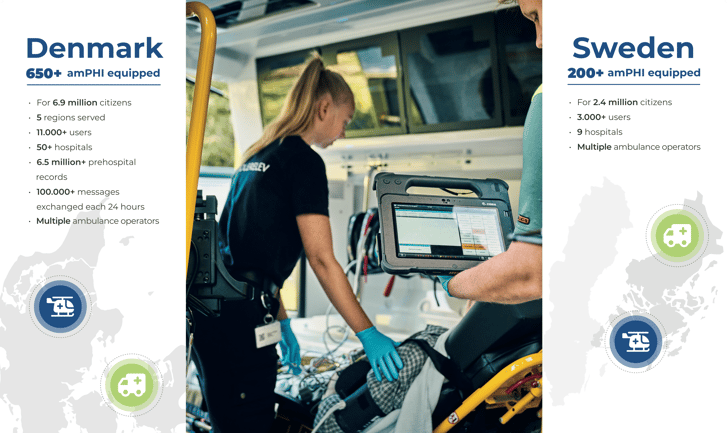
Dedalus Amphi In Sweden, Denmark

The success in established markets like Denmark and Sweden suggests promising potential for expansion into the Netherlands.

Exploring Dutch market potential 

To determine whether amPHI meets the needs of Dutch prehospital care, Living Stone conducted interviews with ambulance service professionals across the Netherlands. These insights provide Dedalus with a solid foundation for tailoring their approach and addressing the specific needs of healthcare professionals in the region.

Ready to make an impact 

This project highlights the importance of thorough market research when introducing innovative solutions in the complex and rapidly evolving healthcare sector. With the collaboration between Dedalus and Living Stone, amPHI is well-positioned to deliver a significant impact on prehospital care in the Netherlands.

Anne-Mie Vansteelant
COO | Managing Partner at Living Stone

Related Posts

Sales Enablement in Healthcare & Engineering: What's Working Right Now

Something's shifted in B2B sales over the past couple of years, and if you're in healthcare or engineering, you're probably feeling it more than most. We've been talking to sales teams and marketing leaders in these industries, and the same themes keep coming up. Buyers who've already done most of their homework before the first conversation. Sales cycles that stretch out over a year with buying committees that seem to grow every month. Compliance requirements that turn every piece of content into a minor legal review. If this sounds familiar, you're not alone. Here's what we've been sharing and learning from the companies navigating this stuff.

More Than Words: Why Language Barriers Are Intersectional

By KadijaBouyzourn In public health, language is often treated as a technical issue. Translate the leaflet, subtitle the video, tick the compliance box, job done. But my research shows that language barriers are rarely just about language. They are deeply intersectional, shaped by who people are, where they come from, and what the system expects of them. During my PhD, I studied multilingual health communication in Brussels, with a focus on Moroccan-background communities, particularly speakers of Darija and Amazigh. What I found is that language exclusion is layered, not linear. It intersects with literacy, gender, digital access, trust, and colonial legacies. These barriers don’t exist in isolation. They compound.

The Frankenstein Approach to Marketing

Imagine a marketing team gathered around a table, piecing together a campaign from unrelated elements—a social media post here, a Google ad there, a rushed email, a video concept pulled from another project. Lightning flashes and the campaign lurches to life. ⚡ It’s alive! Except… it’s not. This is the Frankenstein approach to marketing and it rarely works. 🧟